
How to Choose a Design-Build Firm: 10 Questions
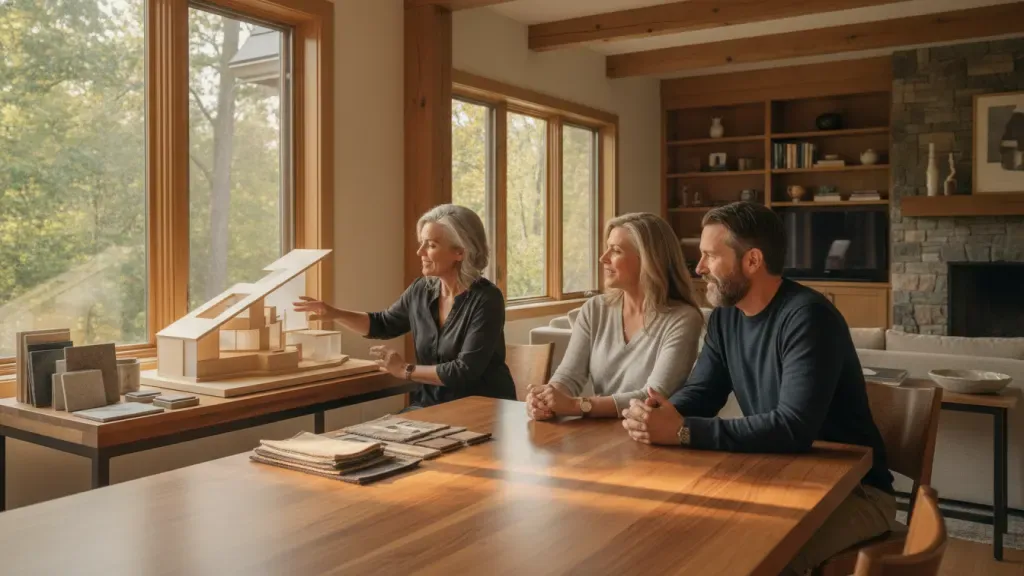
How to choose a design-build firm: look beyond the portfolio and ask how the team will protect your decisions, budget, communication, and home from the first conversation through construction. The right firm should make its responsibilities clear, explain its process in plain language, and show that its design and construction work are coordinated rather than handed from one disconnected team to another.
For homeowners in Chapel Hill, Carrboro, Durham, Cary, Apex, Raleigh, and nearby North Carolina communities, these questions help compare firms on accountability and fit instead of relying on a polished photograph or the lowest initial number.
Why does choosing the right design-build firm matter more than comparing the first budget?
Q: Why is the firm selection so important? A: A design-build firm influences how your project is defined, documented, priced, coordinated, and built. A firm that communicates clearly before construction can help you make better decisions earlier, when changes are easier to understand and coordinate.
Budget matters, but an early budget is not the whole project. It reflects the scope, assumptions, selections, site conditions, and level of documentation available at that point. Two proposals can look similar while making different assumptions about design services, allowances, coordination, permits, or project management.
Instead of asking only, "Who is cheapest?" ask which firm can explain what is included, what is still unknown, and how those unknowns will be resolved. You are looking for a disciplined process that makes decisions visible and respects how you want the finished home to support daily life.
1. What does design-build mean for this project?
Q: What should a design-build contract clarify? A: It should clarify who is responsible for design, estimating, construction, communication, coordination, and decisions from the beginning. Design-build usually brings those responsibilities into one accountable relationship, but it does not automatically guarantee a faster, cheaper, or trouble-free project.
Ask the firm to describe its model using your project as the example. Will the same team coordinate design, estimating, trade input, and construction planning? When a design decision affects budget or constructability, how does that information move through the team?
The phrase design-build is not a substitute for a clear agreement. A strong answer connects the delivery model to your homeowner experience: fewer gaps between design intent and construction, earlier coordination, and one team responsible for explaining the path forward.
For a broader explanation of integrated construction, see The Design-Build Advantage: How Integrated Construction Works. That article can help you understand the model before you compare individual firms.
2. Which licenses, credentials, and responsibilities apply to the people on the project?
Q: What credentials should a homeowner verify? A: Verify the relevant contractor, architectural, and professional credentials for the work being proposed, and ask which named person is responsible for each part of the project. Credentials matter most when the firm explains how they affect design decisions, permitting, contracts, and construction oversight.
Do not assume that a firm name tells you who will actually lead the work. Ask:
- Who will be the contracting party?
- Who prepares or coordinates the design documents?
- Who will communicate with the local permitting authorities?
- Who is responsible for construction decisions when field conditions differ from the drawings?
- Which licensed professionals will be involved, and in what capacity?
North Carolina homeowners should also ask how the firm handles local permitting and inspections for the type of renovation, addition, or new construction under consideration. The answer should be specific to your project, not a vague promise that "the office" will take care of everything.
Tekee Design Build is led by Nico Martinez, who holds a Bachelor of Architecture, is a licensed residential contractor in North Carolina, and has architecture licensure in Colombia. Those facts describe Nico's background. They should not be treated as a claim that every person on a project holds the same credentials.
3. How will the firm help you see and coordinate the project before construction?
Q: What should technology do for a homeowner? A: Technology should make the project easier to understand and coordinate. Three-dimensional planning, accurate existing-condition documentation, and digital coordination can help homeowners review decisions earlier and help the team identify conflicts before they become field problems.
Ask to see an example of how the firm uses technology, not just a list of software names. Can you review a three-dimensional model before work begins? How are existing conditions documented in a renovation? How are mechanical, electrical, plumbing, structural, and architectural decisions coordinated?
Tekee Design Build describes its use of Building Information Modeling, Virtual Design and Construction, laser scanning, and clash detection as part of its project delivery approach. In homeowner terms, these tools are valuable when they help you visualize a proposed space, review a conflict early, or make a better-informed decision before construction reaches that point.
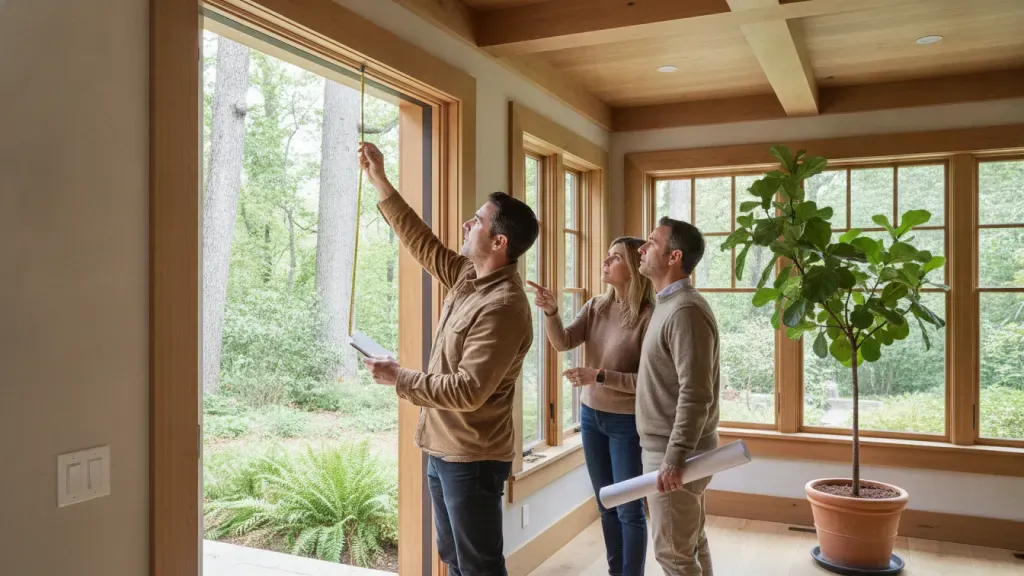
Technology should support craftsmanship and communication, not become a technical performance. A useful answer will connect the method to a homeowner benefit: fewer surprises, clearer decisions, and a more considered path from design to execution.
4. How are scope changes, allowances, and budget surprises handled?
Q: What is a good answer about change orders? A: A good answer explains how the firm documents a change, describes its effect on scope and budget, obtains approval, and updates the project record. It should also explain how the team reduces avoidable surprises through early investigation and coordination.
Every substantial project contains decisions that develop over time. Existing walls may reveal conditions that were not visible at the start. A material may be unavailable. A homeowner may decide that a room should serve another purpose. The important question is not whether change is possible. It is whether the firm has a transparent way to manage it.
Ask these follow-up questions:
- What assumptions are included in the early scope?
- How are allowances explained and updated?
- When will you receive written information about a requested change?
- Who reviews the design and construction impact before approval?
- How are schedule effects communicated?
Be cautious with a process that treats every question as a surprise or every change as the homeowner's problem. A coordinated firm should distinguish between a client decision, an existing-condition discovery, a design issue, and a construction error, then explain the next step.
5. Can the firm show relevant work, references, and reviews?
Q: What makes a portfolio useful? A: A useful portfolio shows work that is relevant to your project type, scale, age of home, level of detail, and desired experience. It should help you understand not only how a finished space looks, but how the firm thinks, coordinates, and responds to the realities of construction.
Look for relevance rather than volume. If you are renovating an older home in Carrboro, ask about work involving existing conditions and careful transitions. If you are planning a custom home in Chapel Hill or Raleigh, ask how the firm approaches site decisions, long-term livability, and early design coordination. If you are planning an addition, ask to see how the new work relates to the original home.
Request references who can speak about the process, not only the final photographs. Ask those homeowners:
- Was communication consistent?
- Were decisions and changes explained clearly?
- Did the finished work reflect the design discussions?
- How did the firm respond when a problem appeared?
- Would you choose the same team again?
Reviews and testimonials are useful signals, but they are not a substitute for a conversation. A thoughtful firm should be comfortable discussing both the work it is proud of and the conditions that require careful management.
6. Who will actually lead communication and day-to-day decisions?
Q: What should you learn about the project team? A: Learn who will make decisions, who will be your primary contact, who will be present during construction, and how questions are tracked. The person who introduces the project should be honest about who will own the relationship after the agreement is signed.
Ask how the firm balances a boutique experience with the practical need for dependable project coordination. You should know whether communication happens through scheduled meetings, shared records, site conversations, or another defined rhythm. Ask what happens when you need an answer and the primary contact is unavailable.
For an owner-led firm, direct involvement can be a meaningful benefit when it is paired with clear capacity and reliable systems. It is reasonable to ask how many projects the firm manages at one time, who coordinates trusted trade partners, and how the team protects attention to detail as work moves forward.
7. How does the firm make design decisions with your household in mind?
Q: What should the first design conversation accomplish? A: The first design conversation should clarify how you live, what is not working today, what the project needs to support, and which decisions require the most care. It should feel like a thoughtful exchange, not a rushed sales presentation.
Bring questions about daily routines, entertaining, storage, work, aging in place, children, pets, outdoor connections, and the character you want to preserve. A good design-build firm should listen for the experience behind the request. "We need a larger kitchen" may also mean that family members want to cook together, that guests gather in one place, or that an existing layout separates people who want to be connected.
Tekee's approach is grounded in the idea that a home is more than a finished image. The process should connect design decisions to the memories, routines, and relationships the space is meant to hold. You can learn more about that philosophy on The Tekee Way.
8. What is included in the agreement, and what is still to be decided?
Q: What should you understand before signing? A: Before signing, understand the parties, services, design responsibilities, construction scope, payment structure, allowances, schedule assumptions, change process, insurance, warranty responsibilities, and conditions for ending the agreement. Ask the firm to explain any section you cannot restate in your own words.
A contract should make the working relationship easier to understand, not create a fog around it. Ask what happens between the initial design conversation and construction authorization. Clarify when the scope becomes detailed enough for a meaningful construction plan and which selections or investigations remain open.
Do not sign simply because you feel pressure to reserve a slot. A respectful firm should give you room to review the agreement, discuss questions, and decide whether the relationship is right for your household.
9. What local experience will shape the project?
Q: Why does local experience matter? A: Local experience helps a firm recognize how existing homes, sites, permitting expectations, climate, neighborhoods, and trade relationships may affect a project. It should result in better questions and coordination, not unsupported promises that every project will be simple.
Ask what the firm knows about the communities where you are considering work. In the NC Triangle, an established Chapel Hill renovation may require a different approach from a new custom home on a Durham infill site or an addition in Raleigh. Carrboro, Cary, and Apex homes also bring their own combinations of lot conditions, neighborhood character, and household needs.
Local fit includes more than saying a city name in a service-area list. Ask whether the firm has worked with projects like yours, understands the relevant permitting path, and can explain how site and neighborhood conditions will be investigated before commitments are made.
10. What did the first consultation reveal about the relationship?
Q: How can a consultation help you compare firms? A: A consultation helps you evaluate how the firm listens, explains uncertainty, asks questions, and responds to your priorities. You should leave with a clearer understanding of the next step, the information still needed, and whether the team feels trustworthy and capable of working with your household.
After the conversation, write down what you heard. Did the firm ask about your goals before presenting a solution? Did it explain what it knows and what it needs to investigate? Did it respond directly when you raised concerns about budget, timing, disruption, design decisions, or communication?
Then compare the quality of the conversation, not only the enthusiasm of the presentation. The strongest relationship is usually built through honest expectations, mutual respect, and a shared understanding of what the project is trying to become.
Use these ten questions to compare fit, not just firms
Q: What is the simplest way to compare design-build firms? A: Ask every firm the same core questions, record the answers, verify important credentials and references, and compare how clearly each team explains responsibility, coordination, uncertainty, and next steps. Choose the relationship that makes you feel informed rather than rushed.
| What to evaluate | A strong answer should show |
|---|---|
| Accountability | Clear responsibility from design through construction |
| Credentials | Relevant licenses and named project responsibilities |
| Coordination | A plain-language connection between design tools and homeowner benefits |
| Budget management | Written scope, transparent assumptions, and a defined change process |
| Experience | Relevant work, references, and honest discussion of project conditions |
| Relationship | Respectful communication and a consultation that improves clarity |
Tekee Design Build works with homeowners planning renovations, additions, custom homes, and outdoor living projects in the North Carolina Triangle. Nico's design and construction background, together with the firm's technology-supported process and trusted trade relationships, is intended to bring design and execution into one considered path. The right choice is still the one that fits your goals, project, and expectations.
Contact the Dream Maker to begin a thoughtful conversation about your home project.
Frequently asked questions
What is the first question to ask a design-build firm?
Ask the firm to explain who is responsible for design, estimating, construction, communication, and changes. The answer should show how the team will stay coordinated throughout the project and who will be accountable when a decision affects more than one part of the work.
Is design-build always better than hiring separate professionals?
Not automatically. Design-build can be a strong fit for homeowners who value one accountable team and coordinated decisions, but the right choice depends on the project, the firm's capabilities, the agreement, and the working relationship. Compare the actual process rather than relying on the label.
Should a design-build firm provide a detailed price at the first meeting?
A first meeting may not provide enough information for a detailed construction price. The firm should explain what can be understood at that stage, what must be investigated, and how design development, selections, site conditions, and scope decisions will inform the working budget.
How do I know whether a portfolio is relevant to my project?
Ask whether the examples involve a similar project type, existing-home condition, scale, level of finish, or site challenge. Then ask about the process behind the images, including communication, coordination, changes, and the homeowner experience.
What should I bring to a design-build consultation?
Bring your goals, photos or notes about the current home, rough priorities, questions about the process, and any information you have about the property. You do not need every answer. A useful consultation helps identify which decisions and investigations should come next.